Pros and Cons of Internet Radio Broadcasting
The honest pros and cons of internet radio in 2026. What you gain over FM/AM, what you give up, and how broadcasters and listeners experience each tradeoff.
Internet radio is a radio station you broadcast and listen to over the internet, rather than over AM, FM, or satellite signals. The technology is the same age as broadband itself. SHOUTcast launched in 1998 and Icecast followed in 1999. Only in the last decade has it become the default for new stations.
The advantages are real. So are the disadvantages. And which side wins depends on whether you're broadcasting or listening, and what you're trying to accomplish.
After supporting more than a thousand stations on CloudRadio, we've seen the same tradeoffs come up over and over. This guide lays them out honestly: what internet radio gives you, what it asks in return, and where the line falls for broadcasters versus listeners.
What you'll learn {:#what-youll-learn}
- How internet radio actually works
- Pros of internet radio for broadcasters
- Cons of internet radio for broadcasters
- Pros of internet radio for listeners
- Cons of internet radio for listeners
- Internet radio vs FM/AM at a glance
- Frequently asked questions
How internet radio actually works {:#how-internet-radio-actually-works}
A traditional radio station broadcasts a signal from a transmitter. The signal travels through the air and stops when it runs out of power, hits a hill, or crosses a coastline. Coverage maps are measured in miles.
Internet radio replaces the transmitter with a streaming server. Your encoder sends audio to the server. The server sends it to anyone in the world with a player and a connection. There is no transmitter, no tower, no FCC frequency to license.
Most modern stations stream over HLS, Apple's HTTP Live Streaming format. Icecast is the common fallback for legacy players. SHOUTcast still exists, but its share is shrinking. The protocol matters less than the listener experience. On the listener side, HLS just works in every browser and every mobile device without a plugin.
If you're new to the stack, our internet radio starter guide walks through the parts in detail. The rest of this article assumes you understand the basics and want to know whether the tradeoffs make sense for you.
Pros of internet radio for broadcasters {:#pros-of-internet-radio-for-broadcasters}
Low start-up costs
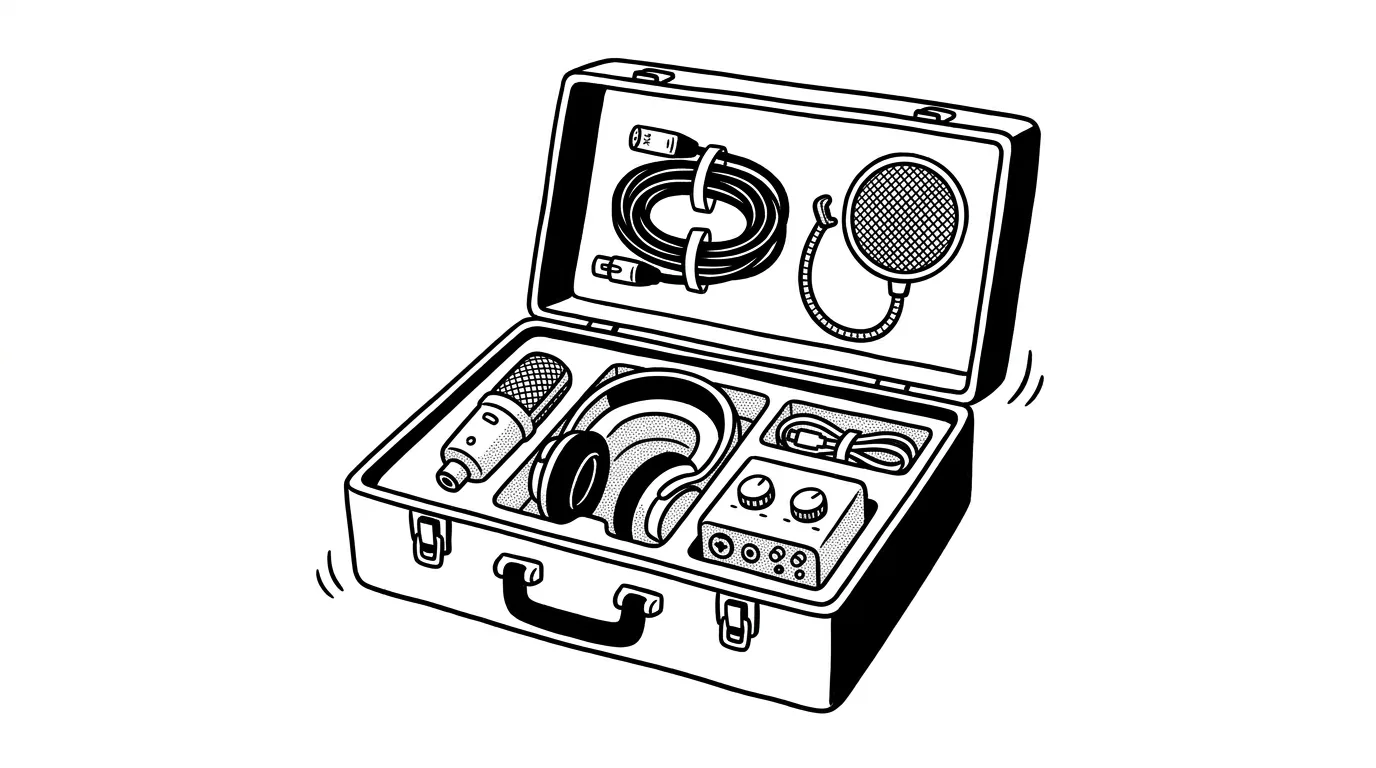
A new internet station can launch for the price of a decent USB microphone. You don't need a transmitter, a tower, or studio real estate. A spare room, a laptop, a mic, and a hosting plan is enough.
Our cost to start guide breaks down typical budgets. The cheap end (under $200 hardware, $20-40/mo hosting) is realistic. The expensive end is mostly optional gear like mixing desks, processors, and acoustic treatment. Compared to a low-power FM build, which starts in five figures and requires a license, the gap is enormous.
For a complete picture of what to buy first, see our radio station equipment guide. Most new broadcasters overspend on equipment they never use.
Reach is global by default
A low-power FM signal may cover only a few miles. A 100-watt LPFM station, per the FCC, has a service contour of roughly 3.5 miles. Even full-power FM tops out in the tens of miles, depending on antenna height and terrain. An internet stream covers everywhere the internet does. We host stations broadcasting from Vancouver to listeners in Lagos, and from Manila to listeners in Toronto.
That global reach is the single biggest reason terrestrial stations add an internet simulcast. It's also why niche genres (drum and bass, Tamil film music, 1960s jazz) thrive online in a way they never could on local FM.
Automation has gotten very good
Modern broadcasting software can run a station unattended for months. Schedule playlists, slot in ads, drop in jingles, run news at the top of the hour, and switch to a live show when a host signs on. Then go back to automation when the show ends.
CloudRadio's media library handles this in the browser. Upload your tracks, set a schedule, and the rest happens server-side. No encoder on a home PC to babysit, no power outage that takes you off the air.
Detailed audience data
This is the single biggest analytical advantage over FM. Terrestrial stations buy Nielsen ratings and pay for diary panels. Online stations see real listener counts in real time. They also see geography, session length, listening device, and which song made people tune out.
Our customers use listener stats to test new shows, optimize ad placement, and figure out which markets to promote in. It's the kind of data terrestrial broadcasters would pay six figures for.
Easy integration with everything else
An internet station is just a URL. That makes it trivial to embed a web player on your website, submit to directories like TuneIn and Streema, and publish to smart speakers (Alexa, Google Home). If you want a dedicated mobile app, an app builder can wrap your stream without custom development.
The same stream feeds all of them. Listeners pick the device they prefer. You don't manage a separate transmitter chain for each.
Easy transition into podcasts
Podcasts and radio shows share equipment, format, and editorial muscle. The main difference is distribution. Podcasts use RSS feeds; radio uses live streams. If you're already producing show segments for live air, repacking them as podcast episodes is a few extra steps. See our radio vs podcasts comparison for the full breakdown.
Many of the biggest podcasts (Freakonomics Radio, This American Life, Planet Money) started as or alongside radio shows. The skills transfer cleanly in both directions.
Available on every device
Smartphones, laptops, smart TVs, gaming consoles, smart speakers, car infotainment systems with Apple CarPlay and Android Auto. If it has a screen and an internet connection, it can play your stream. There's no equivalent for FM. A new car may or may not have an FM tuner. Most do have Bluetooth, CarPlay, or Android Auto built in.
Cons of internet radio for broadcasters {:#cons-of-internet-radio-for-broadcasters}
Discovery is harder
This is the honest disadvantage nobody likes to talk about. On FM, listeners scan the dial and land on you by accident. On the internet, they have to know your station exists before they can tune in.
That means marketing matters more. Stations that succeed online are deliberate about promotion, social presence, directory listings, and SEO. A memorable domain name and consistent listener engagement also compound over time. The barrier to launching is low. The barrier to being heard is higher than most newcomers expect.
Royalties are real
A US-based internet station playing commercial music owes royalties to SoundExchange for recording rights. It also owes performing-rights organizations like ASCAP, BMI, SESAC, and sometimes GMR for songwriter rights. Catalog coverage differs, so most stations end up licensing more than one PRO. The 2026 SoundExchange minimum is $1,000 per year per station for commercial webcasters, on top of PRO fees and a usage-based component.
There's no royalty obligation if you only play royalty-free music, original content, or talk. But if you're streaming Top 40, factor licensing into your budget. The right format choice can also keep licensing costs predictable. Our music licensing help article walks through the specifics.
Monetization is fragmented
Selling local radio ads on a global stream is hard. Your audience isn't local. Programmatic audio networks are an option, but small stations often net only a few dollars per thousand filled impressions after fill rate and platform cuts.
Stations that monetize successfully online usually combine sources: programmatic, direct sponsors, listener donations, premium tiers, and merchandise. Our monetization guide covers the realistic options. The honest framing: don't quit your day job for ad revenue alone.
The internet has to work
If your encoder loses connectivity, you go off the air. If the listener's connection drops, they go off the air. Terrestrial FM keeps playing through a power outage as long as the transmitter has a generator. Internet radio depends on two networks staying healthy.
The fix on the broadcast side is to run the stream from a hosting provider rather than from a home PC. The fix on the listener side is mostly out of your control. It mostly isn't a problem, but it's a real one.
Pros of internet radio for listeners {:#pros-of-internet-radio-for-listeners}
More variety than the dial can hold
A typical FM market has 30 to 50 stations, and the format choices repeat. Online, listeners pick from tens of thousands of stations in every genre and language. Bluegrass-only, ambient-only, 1980s East Coast hip-hop only, a station that plays nothing but obscure French ye-ye. All of it exists, and listeners can find it. See our breakdown of radio station formats for the typical buckets.
This is the single biggest reason streaming has been winning. The supply of formats vastly exceeds what terrestrial dial space allows.
Better sound quality (when bandwidth allows)
A 128 Kbps stream typically sounds cleaner than an FM signal at the edge of its coverage area. No static, no pilot tone, no multipath distortion. For listeners with good connections, internet radio is the higher-fidelity option in most markets.
The catch is "when bandwidth allows." A weak mobile signal can buffer, while FM keeps playing. That's why CloudRadio delivers streams over HLS: the player automatically drops to a lower bitrate when the network is slow, then climbs back up when it recovers. The listener hears music instead of silence. We dig into the tradeoffs in our audio quality guide.
Now-playing data and interaction
Listeners see the song title, artist, album art, and (if the station configures it) a buy link, a Spotify link, or a request form. They can like the song, share it on social, look up the artist on the spot.
None of that is possible on FM without a separate phone app, and even then, it's usually wrong or stale. The metadata layer is the modern listener experience, and it's native to internet radio.
Listen anywhere with a connection
Submarine 60 feet underwater? Probably not. Airplane with onboard wifi at 35,000 feet? Yes. Hotel room in a country you've never visited? Yes. The reach goes both ways: broadcasters reach the world, and listeners can take their hometown station everywhere they go.
For long-distance commuters, expats, and travelers, this is the killer feature. An FM station you love in Buenos Aires is unreachable from Berlin. The same station's stream is one tap away.
Fewer ads (on most non-commercial streams)
Many independent online stations run with light or no advertising. Some paid music services and station-specific subscriptions remove ads entirely. Compared to commercial FM's 12 to 16 minutes of advertising per hour, the ad load on most internet streams is dramatically lower.
We've written about radio ads and how to make them work without driving listeners away. The general rule online: less is more.
Cons of internet radio for listeners {:#cons-of-internet-radio-for-listeners}
Data usage adds up
A 128 Kbps stream uses about 56 to 58 MB per hour. Listen for two hours a day on mobile data and that's roughly 3.4 GB per month. On a metered plan, it shows up on the bill.
Many listeners now have large or unlimited plans, and 5G coverage is wide enough that throughput rarely caps stream quality. But capped mobile data still matters in plenty of markets. Most streams offer a lower-bitrate version (typically 64 Kbps) that cuts data use in half.
Local content can be thinner
FM is excellent at local news, weather, traffic, and emergency alerts. Internet stations often skip these in favor of music or syndicated talk. If you depend on radio for your morning commute, the local-information gap is real.
This is changing as terrestrial stations add internet simulcasts. The best of both worlds: local content, internet-grade distribution. But pure-online stations rarely do local well, and listeners notice.
Privacy and tracking
Internet radio platforms collect more data than FM ever could. Listening history, geography, device type, sometimes account-level identifiers. For most listeners this is invisible and harmless. For listeners who care about minimizing their digital footprint, it's a real cost of the medium.
The fix is reading platform privacy policies and using browser-based players rather than account-based apps where possible.
If you're a broadcaster choosing tools, picking a host with transparent data practices matters. CloudRadio doesn't sell listener data, and the analytics we provide come from the streaming server, not from third-party trackers.
Internet radio vs FM/AM at a glance {:#internet-radio-vs-fmam-at-a-glance}
| Dimension | Internet radio | FM / AM |
|---|---|---|
| Reach | Global | Local; miles to tens of miles, depending on power, antenna height, and terrain |
| Startup cost | Hundreds of dollars | High four to six figures + license |
| License required | No (royalties yes) | Yes (FCC or local regulator) |
| Listener analytics | Real-time, granular | Survey-based, weeks lagged |
| Sound quality | Low-bitrate to high-quality; bandwidth-dependent | FM ~15 kHz audio bandwidth; AM ~5 kHz |
| Works without internet | No | Yes |
| Local content strength | Variable, often weak | Strong |
| Emergency alerts | Rare on pure-online | Built into broadcast standards |
| Discovery | SEO, directories, social | Dial scanning |
| Monetization markets | Global programmatic + niche direct | Strong local advertising |
| Devices | Anything with a connection | Dedicated radios, car tuners |
| Privacy | Listener data is collected | Largely anonymous |
Neither column is strictly better. They're optimized for different problems. Many of the most resilient stations run both: a terrestrial signal for the local market, an internet stream for everyone else.
Frequently asked questions {:#frequently-asked-questions}
Is internet radio replacing FM and AM?
Slowly, in the markets where mobile data is cheap and reliable. Faster among younger listeners, who increasingly default to streaming for music. But FM has structural advantages (no data cost, works offline, instant on, built into cars) that won't disappear soon. For more on where the medium is heading, see our piece on the future of FM in cars.
Do I need a license to start an internet radio station?
In most countries, no broadcasting license is required because you're not using the public airwaves. You do need to pay music royalties if you play commercial music. See our music licensing help article for details.
How much does it cost to run an internet station?
Hardware is a one-time cost in the low hundreds. Hosting is a monthly subscription that varies by provider. Royalties depend on catalog, country, revenue, and listening hours. For US commercial webcasters, SoundExchange alone starts at $1,000 per year, before PRO licenses. Full breakdown in our cost guide.
Can listeners hear my stream in their car?
Yes, through Apple CarPlay, Android Auto, or Bluetooth from a phone. Some cars support TuneIn or other directory apps natively. The listener launches the stream on their phone and the car plays it. No tuner required.
Is the audio quality really better than FM?
In most cases, yes. A 128 Kbps stream on a stable connection beats FM in dynamic range, stereo separation, and freedom from static. Bitrates above 192 Kbps approach broadcast-master quality. FM tops out at roughly 15 kHz audio bandwidth before encoding, with noticeable compression and pilot tone artifacts.
Can I start an internet radio station as a one-person operation?
Easily. Most stations under 1,000 listeners are run by one or two people. Automation handles the off-hours, and the live show is whatever the host has time for. Our launch checklist covers the realistic minimum.
The bottom line
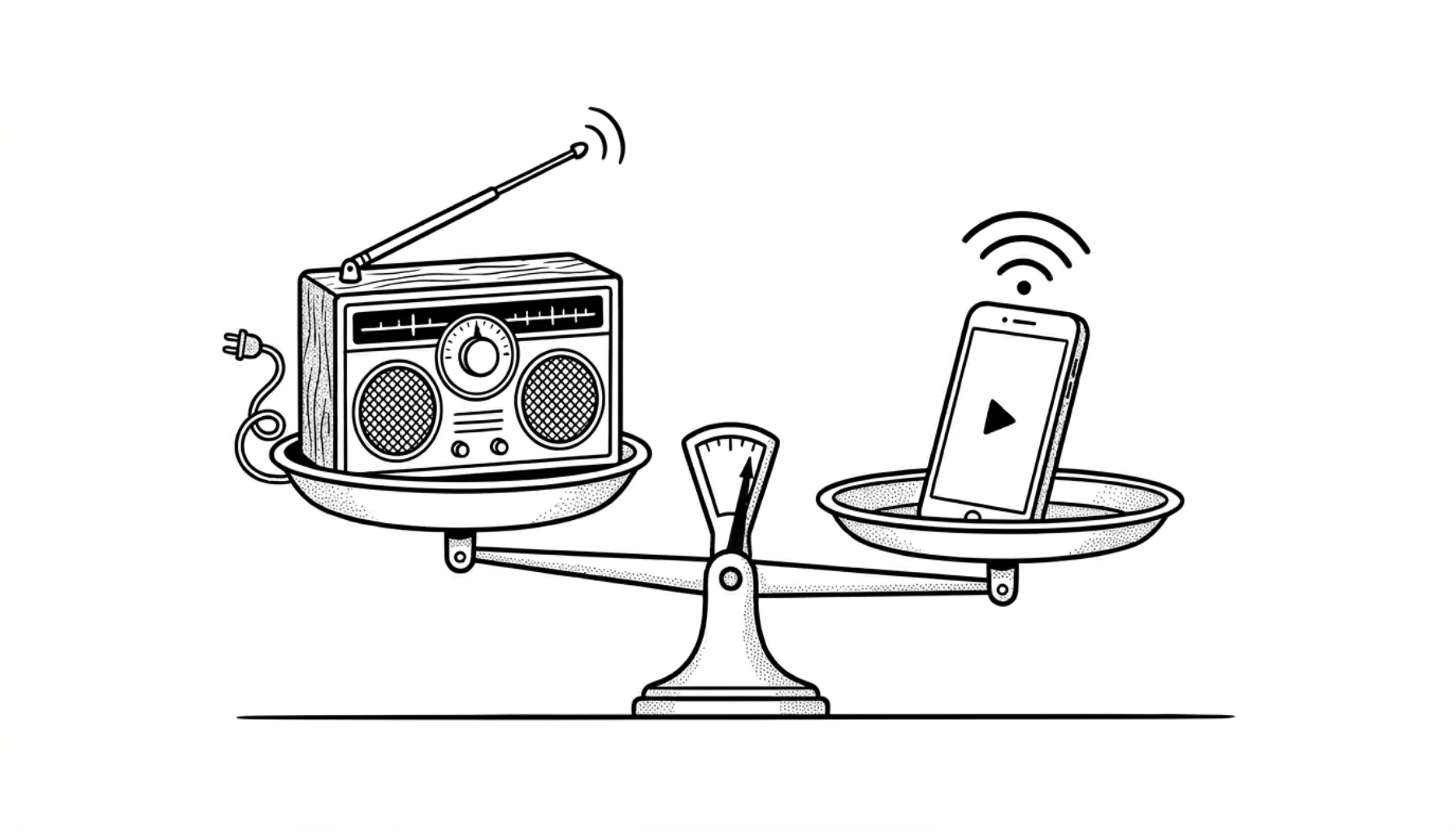
Internet radio's advantages (global reach, low costs, rich data, modern listener experience) outweigh its disadvantages for almost every new station. The disadvantages (discovery, monetization, internet dependency) are real, but solvable with deliberate work.
For listeners, the calculation is different. More variety and better sound versus higher data use and weaker local coverage. Most listeners now use both: streaming for music and discovery, FM for local information and offline reliability.
If you're starting a station, internet is the right default in 2026. The question isn't whether to broadcast online. It's which platform makes it least painful.
That's where we come in. CloudRadio runs your station in the browser, from media library to streaming to listener stats. If you want the simplest path from idea to on-air, start with CloudRadio One.