Radio Show Opening Lines That Hook Listeners
Radio show opening lines that hook listeners in 15 seconds: 6 format archetypes, 10 templates you can steal, and the mistakes that lose the room.
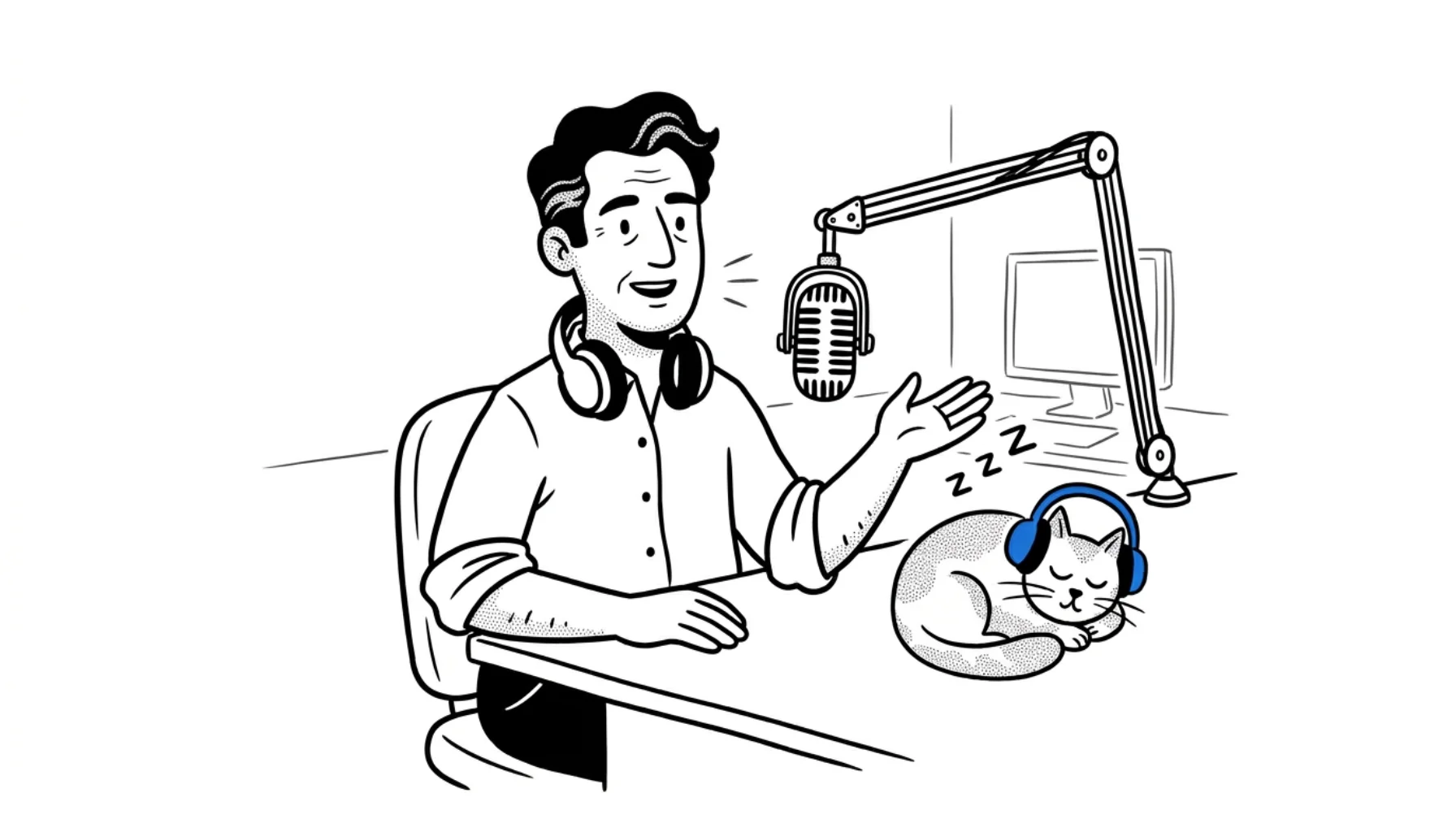
The first 15 seconds of your show decide whether someone stays or turns the dial. That's it. Not the music, not the guest, not the prize. The opening line.
Most hosts overthink it and freeze. Others wing it and ramble. The good ones treat the opening like a chorus: a few lines they can hit every time, with enough room to riff. This guide gives you the playbook.
In this guide
- What a great opening line does
- Six format archetypes
- Ten templates you can steal
- Common mistakes to avoid
- How CloudRadio helps
- FAQ
- Related reading
What a great opening line does
Strip away the personality and a good opening does five jobs in under 20 seconds.
1. Hook attention before the listener decides to leave
The decision to keep listening happens fast. Open with a question, a striking sentence, or a sound that interrupts the listener's autopilot. "It was the day my grandmother exploded" is the first line of Iain Banks's The Crow Road, and it works on radio for the same reason it works on the page: you can't ignore it.
2. Orient the listener so they know where they are
If a listener flips through stations and lands on yours mid-sentence, your opening line is also a sign on the door. Within the first 30 seconds, they should know the station, the show, and roughly what kind of show it is. You don't need to read the legal name every time, but the brand has to land.
3. Promise the next minute
Tell the audience what's coming, even if it's vague. "We've got a wild caller story, a song nobody saw coming, and the weather in two." That promise is the contract that buys you the next break.
4. Set the tone
A morning show and a true-crime show should not sound the same in the first three words. Tone is set by word choice (bright, beautiful, golden vs. unsettled, strange, missing), pacing, and energy level. Match the daypart and the audience's emotional state when they tune in.
5. Be brief
If the listener is still waiting for the show to start 45 seconds in, you've lost them. Most of the great openings in radio are under 12 seconds. Train yourself to land it in one breath.
Six format archetypes
Forget naming specific hosts. Hosts come and go, formats stick. These six archetypes cover almost every great opening you've ever heard.
Archetype 1: The warm morning hello
The classic breakfast opening. Greet the audience by name (their name, not yours), reference the day, and bring energy. Works because morning listeners want to feel met where they are, not lectured.
Good morning, gang. Tuesday. The good kind of Tuesday, where the weekend feels just close enough to plan. Coffee's on, music's loud, let's go.
Pair it with a breakfast show format that keeps the same warmth across the full three hours.
Archetype 2: The curiosity hook
Open with a sentence that demands an answer. The listener cannot turn away because their brain wants closure. Reveal the answer, or part of it, after the first song or break.
Someone in this city won the lottery last night and they don't know it yet. We'll tell you which gas station sold the ticket, after this song.
This is the same trick podcasts use in their cold opens. Set up the mystery, then deliver.
Archetype 3: The cold open
No greeting. No station ID. Drop the listener into a scene already in motion: a clip, a sound, a sentence mid-thought. Use a station sweeper or jingle 30 to 45 seconds later to orient them.
(Sound of a door slamming.) That's the sound of my upstairs neighbor at 5 a.m. We need to talk about him. You're listening to...
The most famous cold open in radio history is Orson Welles's War of the Worlds broadcast from 1938, which dropped listeners into a fake news bulletin so convincing it caused real panic. Worth a listen if you want to feel how powerful the technique is:
Cold opens reward listeners who stay attentive and they sound modern. Don't overuse them: they only work when the scene is genuinely interesting.
Archetype 4: The guest-led intro
Hand the first 10 seconds to the guest. Have them say something off-format, then you come in to anchor the show. The contrast wakes the audience up.
"Hi, I'm Maya Patel, and apparently I'm about to tell three strangers the most embarrassing thing I've ever done." "And we are those three strangers. Welcome to the show."
Great for radio interview formats and any show built around personality contrast.
Archetype 5: The topic-of-the-day opener
Lead with the single thing you most want listeners to think about today. Useful for talk radio, news magazine shows, and any format where the host has a point of view.
Everyone is wrong about how much sleep you need. Including, probably, you. Stick around.
Strong because it promises a payoff and stakes out a position the listener has an opinion about.
Archetype 6: The personality monologue
The host opens with 30 to 60 seconds of unscripted observation about their morning, their commute, something they saw. Works for established hosts whose audience tunes in for them, not for the format. Don't try this until you've built a loyal audience: without that, it reads as self-indulgent.
So I'm in line at the coffee place and the guy in front of me orders a hot chocolate and a side of bacon. At 6 a.m. And honestly I respect it.
If you're still building a relationship with your audience, start with Archetypes 1 to 5 and grow into this one.
Ten templates you can steal
These are starter scripts. Customize the variables, deliver them in your voice, and run the one that fits the daypart.
Template 1: The classic name-and-show
Hi, I'm [host name], and you're listening to [show name] on [station].
Boring on its own. Combine it with one of the hooks below.
Template 2: The curiosity opener
Before the end of this show, you'll know [specific intriguing thing]. Stay close.
Specifics beat vagueness. "Why your morning coffee tastes worse on Mondays" lands harder than "a fun fact."
Template 3: The shared-experience opener
If you've ever [universal small frustration], today's show is for you.
Locks the listener in because they self-identify in the first 5 seconds.
Template 4: The single-question hook
What would you do if [improbable scenario]? That's the show today.
Open the phone lines. The question is the format.
Template 5: The list tease
Three things you need to know today: [one], [two], and [a teaser for the third]. We'll do them in that order.
Listeners stick around for the third item. The list structure is the contract.
Template 6: The weather lead
Good morning. It's [adjective] outside. I know, because I [small specific observation]. Here's the show.
Weather is universal, evergreen, and gives you a free piece of common ground. Bring a small personal detail so it doesn't sound like a forecast.
Template 7: The "what's coming up" promise
Coming up this hour: [guest or segment], [music tease], and [running gag]. Plus, [running gag callback].
Standard but reliable. Pair it with a strong sweeper.
Template 8: The guest pass-the-mic
I have [guest] in the studio, and they just walked in saying [a real thing the guest just said]. We have to talk about it.
The off-script energy is the whole point. Listeners hear something unrehearsed and lean in.
Template 9: The story open
[One-sentence story]. Stick around, I'll tell you how it ended.
Open a loop in sentence one, close it after the next song. Reliable craft you can use daily.
Template 10: The lead-with-the-news
The most important thing you'll hear today is [headline]. Everything else can wait. Here's why.
For news and talk formats. Cuts straight to the point and signals "this matters."
The best shows rotate two or three of these and let the rest sit in reserve. Variety keeps even loyal listeners from auto-tuning.
Common mistakes to avoid
These are the openings that cost you listeners in the first 15 seconds.
- Burying the show name. If a stranger doesn't know who you are by the end of the first sweeper, you've failed the door-sign test.
- Stacking three intros in a row. Don't say hi, then read the show name, then read the station name, then introduce the co-host. Combine.
- Reading from the rate card. "And now, presented by [sponsor], it's..." Listeners feel commerce in the opening seconds and leave. Move sponsor mentions to the second break.
- Asking a question the listener can't answer. "How's everyone doing?" is dead air for the listener. Ask something they want to think about.
- Apologizing for the show. "Sorry I'm a bit late getting started." Don't start with weakness.
- Opening with low energy on a high-energy daypart. Morning drive on a half-asleep host destroys the show before it begins.
If you're struggling to keep that energy hot every morning, work on your show preparation routine before you blame the script.
How CloudRadio helps
A great opening line is wasted if your stream drops in the first minute, or if half your audience can't tune in. CloudRadio handles the streaming so the line your host nailed actually reaches every listener.
FAQ
What do you say at the beginning of a radio show?
Open with one strong sentence that does one job: hook curiosity, greet the audience, or drop the listener into a scene. Land the show and station name within the first 30 seconds, but not necessarily in the opening line itself.
How do DJs introduce a show?
Most DJs use one of six format archetypes: a warm hello, a curiosity hook, a cold open, a guest-led intro, a topic-of-the-day opener, or a personality monologue. The archetype is chosen to match the daypart and the audience's mood when they tune in.
How long should a radio show opening line be?
Aim for under 12 seconds for the hook itself, and under 30 seconds before the first piece of music or content. Listeners decide fast.
Should every show start with the host's name?
Not always. Cold opens and curiosity hooks can land the name 20 to 30 seconds in, after the listener is already pulled in. The rule is that the show and station name must be clear before the first commercial break.
How do I write an opening line if I'm new to radio?
Start with Template 1 (name and show) plus Template 7 (what's coming up). It's the safest combination. Once you have 20 to 30 hours of on-air time, start experimenting with curiosity hooks and shared-experience opens.
Can I use the same opening every day?
Yes, and you probably should. Consistency is what makes an opening recognizable. Vary the variable parts (the day, the tease, the weather note) and keep the structure stable. Listeners will start to recognize the show by its rhythm.
What's the biggest mistake in opening lines?
Trying to do too much. Most weak openings cram a greeting, a station ID, a sponsor mention, a weather line, and a guest tease into the first 25 seconds. Pick one job and do it well.
Should podcasts and radio shows open differently?
The principles are identical. Podcasts can afford a slightly longer cold open (45 to 60 seconds) because listeners chose the episode on purpose. Radio has to assume the listener just landed and might leave.
Related reading
- Radio Games and On-Air Contest Ideas: formats that keep callers engaged once you've hooked them with a great open
- How to Run a Breakfast Show: the daypart where opening lines matter most
- Radio Show Preparation: the routine that makes consistent openings possible
- Radio Interview Format: how to use the guest-led archetype
- How to Write a Radio Script: structure your show beyond the opening
- Radio Slogans: the station identity your opening reinforces
- Radio Imaging: the sweepers and stingers that frame your open
- Become a Radio Host: if you're still finding your on-air voice
- Radio Station Branding: how your opening fits into the larger station identity
Got a great opening line you swear by? Get in touch. We'll feature the best ones in a follow-up.