Best Radio Microphones for Internet Broadcasters in 2026
The best microphones for internet radio in 2026, sorted by use case: solo host, talk show, remote, treated studio. With real signal chains and honest tradeoffs.
The microphone is the only piece of gear a listener can hear directly. Everything else (mixer, encoder, server, codec) just carries what it captured. Buy the wrong mic and no amount of post-processing fully recovers.
This guide picks the best radio microphones for internet broadcasters in 2026. Not podcasters, not streamers, not voiceover artists. Radio. That means hours on air, often with co-hosts or call-ins, often live to a CloudRadio stream. Many hosts also work from rooms that aren't acoustically treated.
The right mic depends less on the brand than on three things. How noisy is your room? Are you solo or multi-host? Do you want USB or a full XLR signal chain? We'll cover all three.
What you'll learn
- Quick picks by use case
- How we chose
- Best mics by use case
- USB vs XLR for internet radio
- Accessories that actually matter
- Budget setup examples
- Common questions
Quick picks
If you only want one answer:
- Best overall for internet radio: RØDE PodMic USB. USB and XLR in one, internal pop filter and shock mount, broadcast-tuned voice. Around $200.
- Best pro broadcast mic: Electro-Voice RE20. The classic. Around $400.
- Best SM7-style without the gain problem: Shure SM7dB. Same voice as the SM7B, with a built-in preamp. Around $500.
- Best budget XLR: RØDE PodMic. Around $99.
- Best ultra-budget USB+XLR: Samson Q2U. Around $70.
- Best treated-room condenser: RØDE NT1 5th Generation. Around $250.
Now the why.
How we chose
A microphone for radio is not the same as a microphone for studio recording. We graded every pick on five things, in this order:
- Speech intelligibility. Does the voice sound clear, present, and easy to listen to for an hour? This matters more than "warmth" or "richness."
- Off-axis rejection. What does the mic pick up besides your mouth? Most home broadcasters have an HVAC vent, a refrigerator, a fan, and a window. Cardioid dynamics handle this. Wide-pattern condensers don't.
- Plosive and proximity behavior. Broadcasters get close to the mic. It has to handle B and P pops without an external pop filter. Bass response should stay predictable when you lean in.
- Comfort over long sessions. Live radio runs in 1 to 4 hour blocks. The mic, the boom, and the headphone monitoring all have to feel invisible by hour three.
- Compatibility with a real radio signal chain. USB into BUTT or Mixxx for solo shows. XLR into a mixer for multi-host or call-in shows. Either way, the mic has to fit.
Best radio microphones by use case
For the solo internet radio host
You're alone behind one mic. You broadcast from a home office. Your room is "fine" but not treated. You want to plug in and start.
RØDE PodMic USB
The single best 2026 mic for a new internet radio host. It's a broadcast-style dynamic with both USB-C and XLR outputs. You also get a built-in pop filter, an internal shock mount, and headphone monitoring. Onboard DSP (compressor, noise gate, high-pass filter) is controlled through RØDE's free Connect app.
If you're just starting an internet radio station, this is the mic to buy first.
You can run it straight into your laptop today and into a mixer later, with no cable swap. That dual-life property is rare.
Around $200. Vendor page.
Avoid if: You already own a quality audio interface and don't need USB. Get the original PodMic for less.
Shure MV7+
The MV7+ is Shure's answer to the PodMic USB. USB-C and XLR, real-time denoising, voice isolation, onboard DSP, an LED touch panel for mute and gain. Sound is clean and broadcast-ready out of the box.
If the PodMic USB is "RØDE's take," the MV7+ is "Shure's take." Both are correct answers. Shure's app and processing are slightly more refined; RØDE's hardware feels slightly more substantial. Pick on app preference.
Around $279. Vendor page.
Avoid if: You want the cheapest path to broadcast quality. The PodMic at $99 is hard to beat on price.
For the pro studio upgrade
You've outgrown your starter mic. Your room is reasonably quiet. You want a mic that will outlast three platforms and two cities.
Electro-Voice RE20
The mic on the desk in nearly every commercial radio studio you've ever been in. Variable-D technology means you can move your head a few inches without the bass response shifting. Built like a pipe. Sounds like authority.
There's a reason it's been the broadcast standard for decades. If you can afford the RE20 and have a clean preamp (any decent interface or mixer), buy it. Stop reading.
Around $399 to $449. Vendor page.
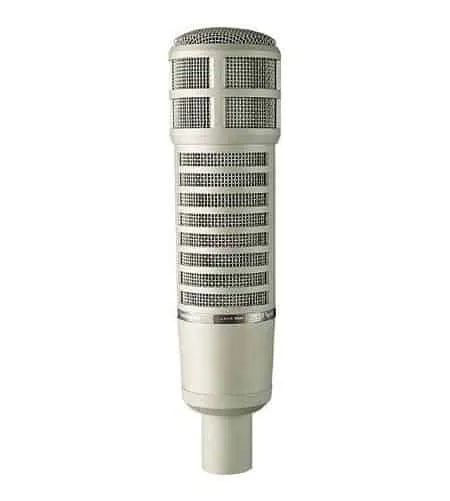
Avoid if: You stream from an untreated room with a noisy laptop fan two feet away. The RE20 is good but not magic.
Shure SM7dB
The SM7B has been the most-recommended podcast mic of the last decade, but it's notoriously gain-hungry. You needed a Cloudlifter or FetHead inline preamp to make most interfaces work with it. The SM7dB fixes that. Same capsule, same sound, with a switchable +18 or +28 dB internal preamp powered by phantom.
If you were going to buy an SM7B and a Cloudlifter, just buy the SM7dB and save a cable.
Around $499. Vendor page.
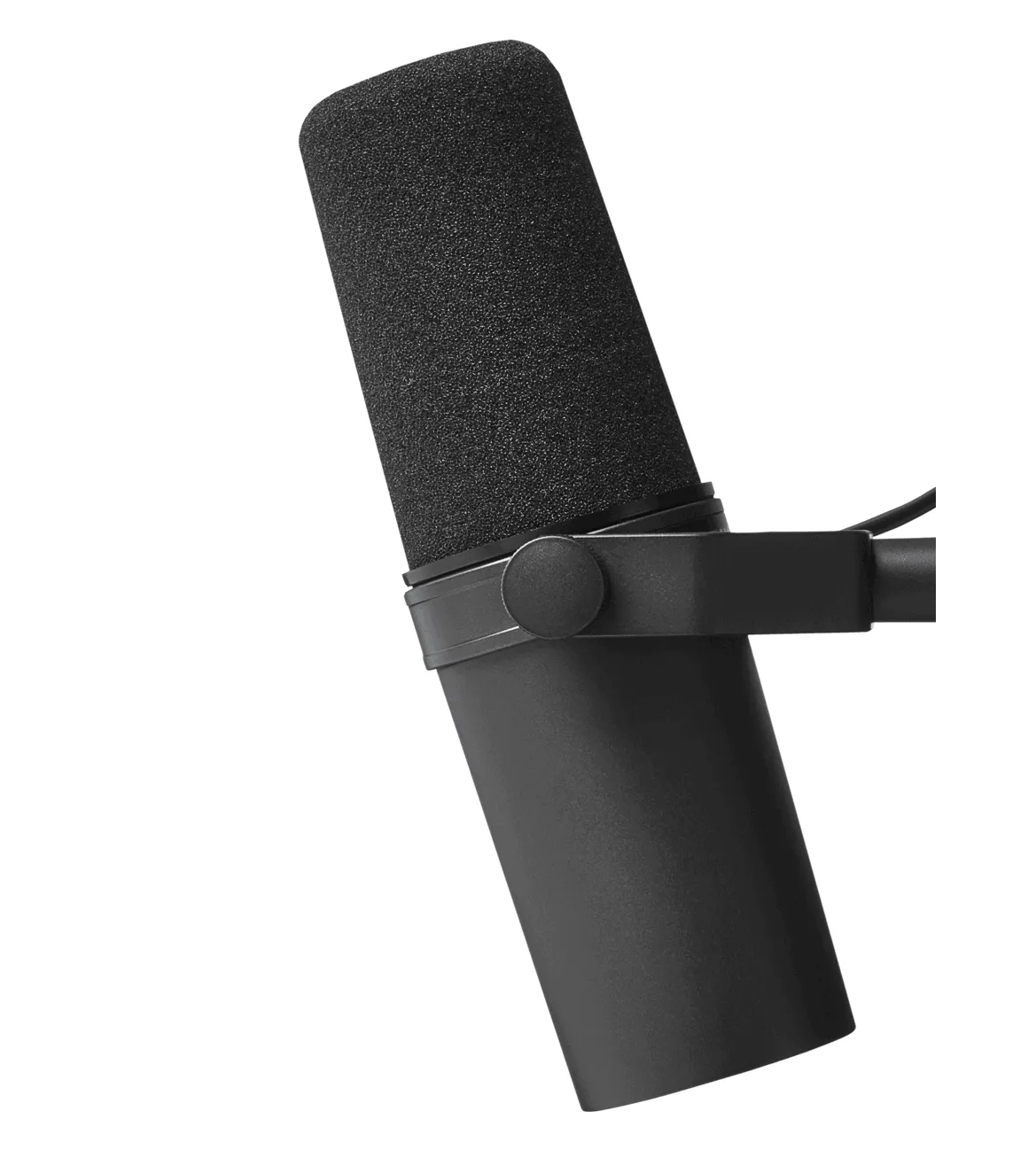
Avoid if: You already own a clean preamp with 60+ dB of gain. The original SM7B is $100 cheaper and identical-sounding into the right interface.
Neumann BCM 705
If you want a German-engineered broadcast mic that isn't an RE20, this is it. Hypercardioid pattern (tighter rejection than the RE20's cardioid). Purpose-built for broadcasters who want detail and silence at the same time. Common in European radio studios.
Around $700 to $750. Vendor page.
Avoid if: You're comparing it to the RE20. Both are great. The RE20 is more forgiving of mic technique; the BCM 705 is more revealing.
For the multi-host talk show
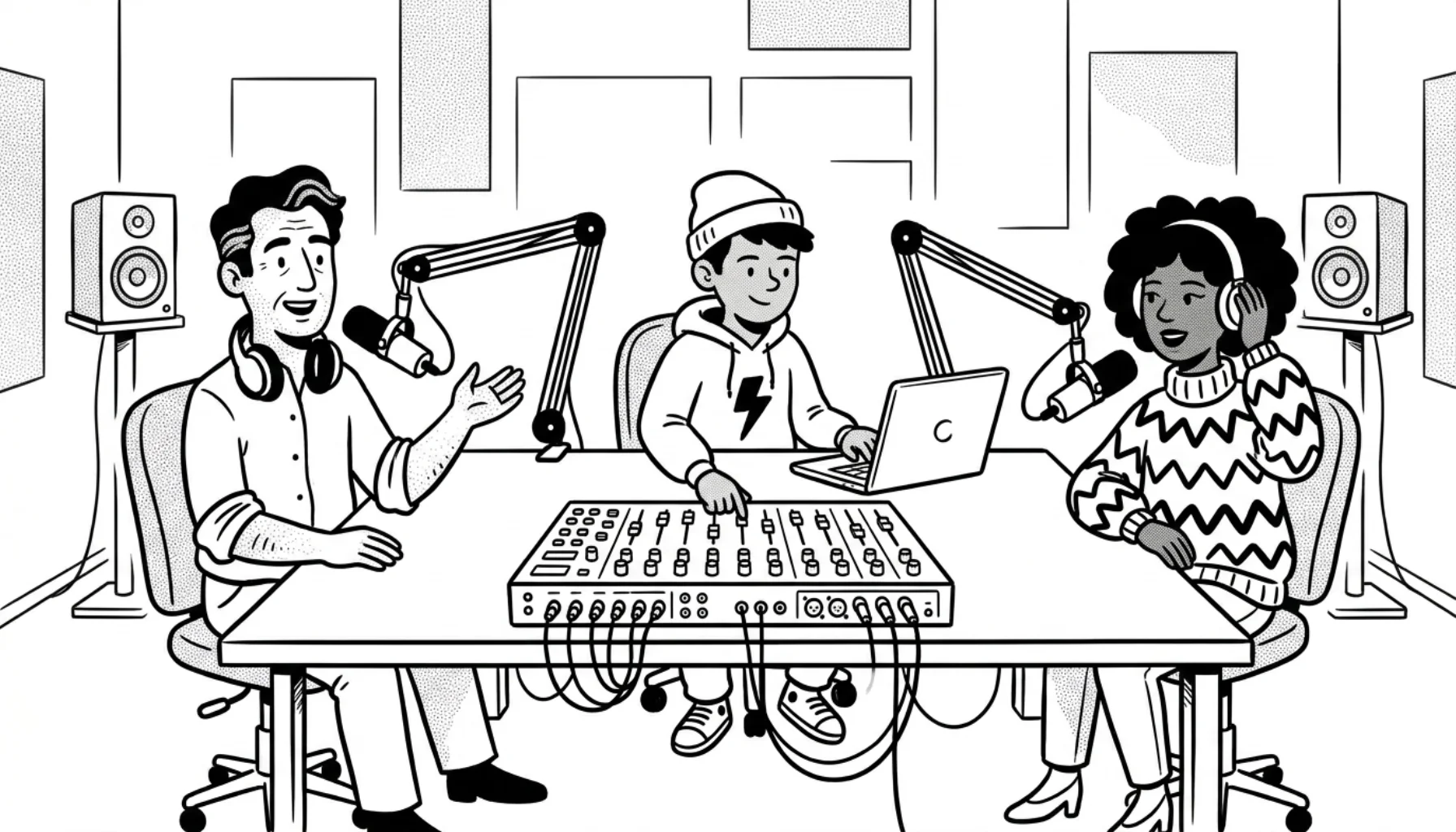
Two or more hosts, sometimes a guest, sometimes a call-in. You're running a small mixer or interface with multiple XLR inputs.
RØDE PodMic
The XLR-only original. Internal pop filter, internal shock mount, low-noise capsule, broadcast-shaped EQ baked in. At $99 each, four PodMics on a small mixer is the cheapest path to a real talk-show sound.
Around $99. Vendor page.
Avoid if: You want USB. Get the PodMic USB instead.
sE Electronics DynaCaster DCM6
An active dynamic mic with a switchable +30 dB internal preamp. Built-in pop filter, integrated yoke mount. Effectively an SM7dB-style "no Cloudlifter needed" mic at half the price. Newer than the established names but well established by 2026.
Around $199. Vendor page.
Avoid if: You want a model with 20 years of broadcast pedigree. The DynaCaster is excellent but newer.
Heil PR40
A favorite of ham radio operators and talk-radio broadcasters. Aluminum-and-iron capsule, very flat frequency response, a "natural" sound that doesn't editorialize the voice. If you don't like the slight warmth of the RE20 or SM7B, the PR40 is your answer.
Around $379. Vendor page.
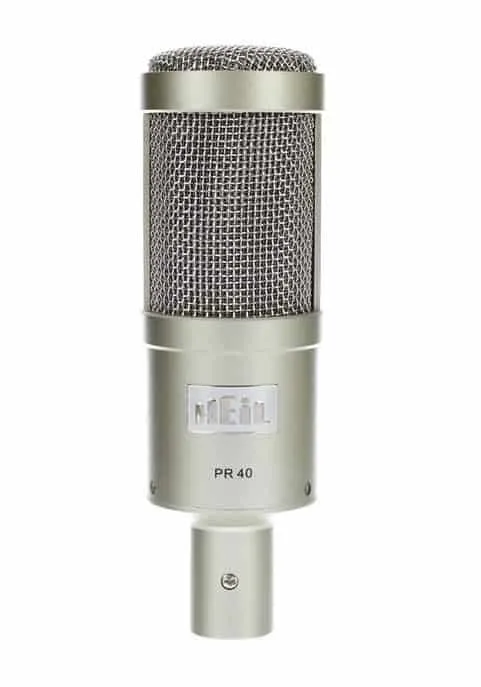
Avoid if: You want a mic that does some of the EQ work for you. The PR40 is honest, sometimes uncomfortably so.
For remote and travel broadcasting
You broadcast from events, conferences, on-location interviews. See our remote radio broadcasting guide for the full workflow.
Samson Q2U
The unsung hero of small-budget radio. Dynamic mic with both USB and XLR outputs, headphone jack, and a foam windscreen in the box. Survives travel. Sounds shockingly good for $70.
If you're broadcasting from a hotel desk once a week, a Q2U in a small bag is all the gear you need.
Around $70. Vendor page.
Avoid if: Your home setup is permanent and you have $200 to spend. The PodMic USB is a noticeable upgrade.
Audio-Technica ATR2100x-USB
Same idea as the Q2U, slightly different voicing. USB-C and XLR, dynamic capsule, good rejection. If your local store stocks one and not the other, you're not making a mistake either way.
Around $80. Vendor page.
Avoid if: The Q2U is in stock. They're peers; price is the tiebreaker.
For the treated-room condenser pick
You've got acoustic panels. Your room is genuinely quiet. You want detail.
RØDE NT1 5th Generation
USB-C and XLR, 32-bit float on USB (much more recovery headroom in supported recording apps). One of the lowest self-noise floors in any condenser at any price. Includes shock mount and pop filter. A standout home-studio condenser in 2026.
If your room can support a condenser, this is the one. The voice is rich and detailed without being harsh.
Around $249. Vendor page.
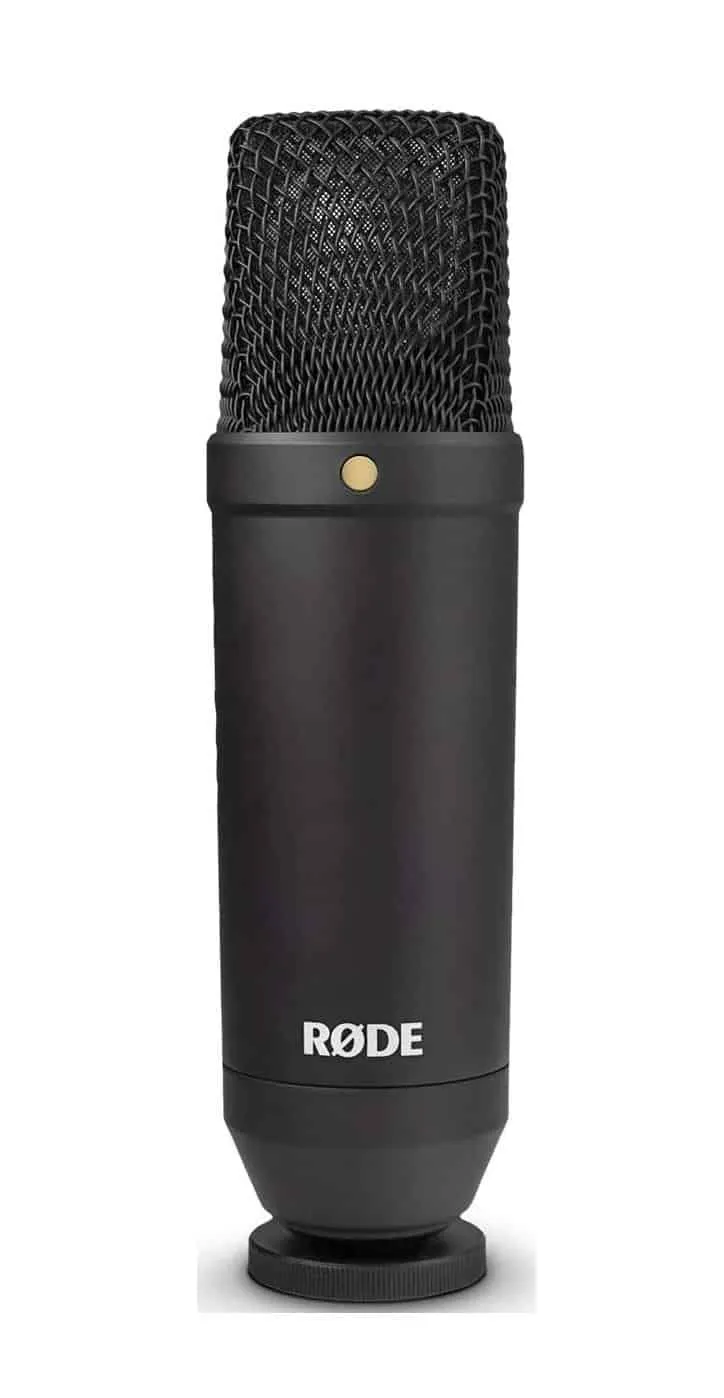
Avoid if: Your room isn't treated. A condenser picks up your computer fan, keyboard clicks, and the dog barking two doors down.
Audio-Technica AT2035
The budget condenser pick. Cardioid only, 80 Hz high-pass filter, 10 dB pad. Good detail for the price. Like any condenser, it still needs a treated room. If room noise is a concern, get a dynamic instead.
Around $150 to $170. Vendor page.
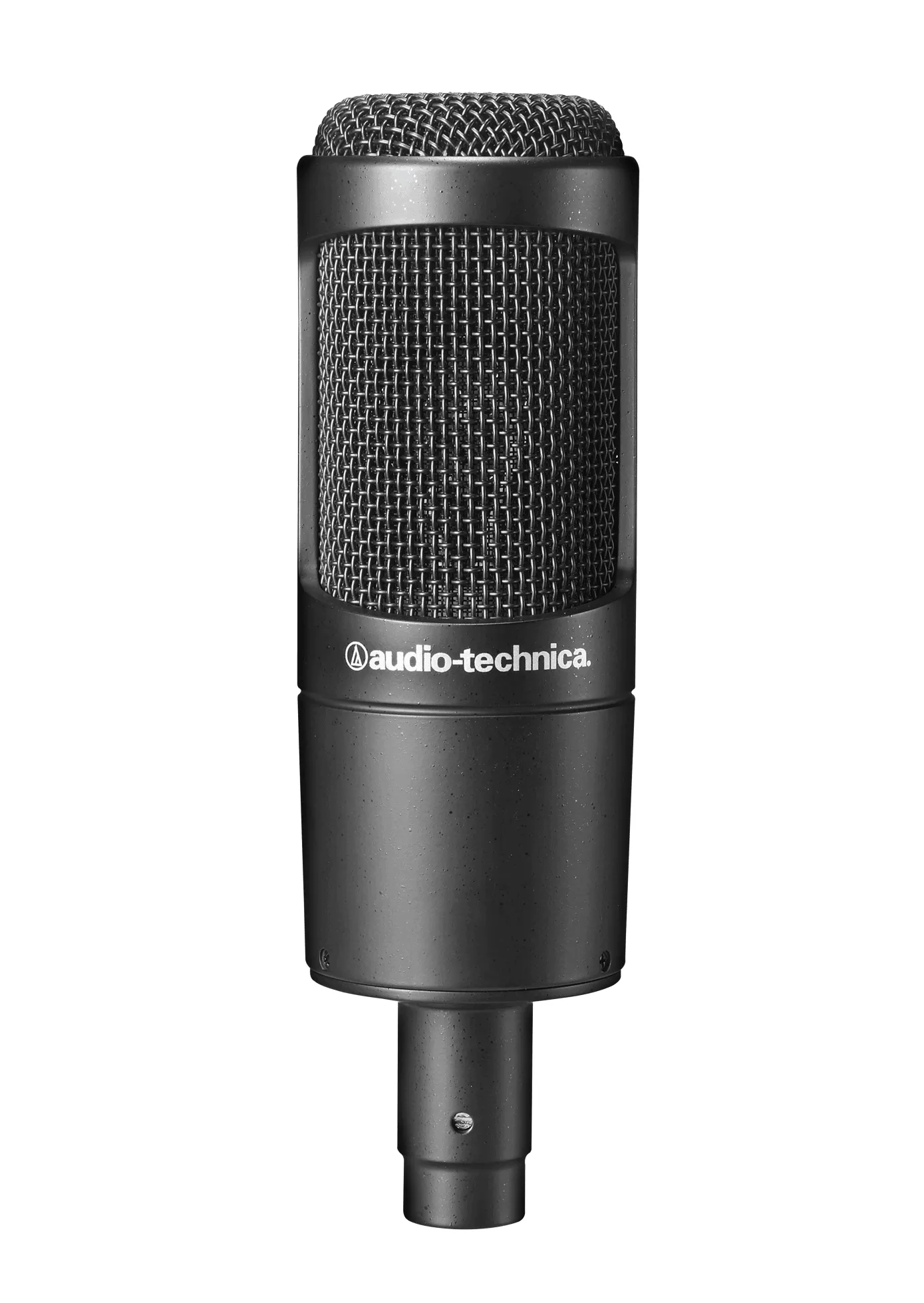
Avoid if: You can stretch to the NT1 5th Gen. The NT1 is the better mic, full stop.
USB vs XLR for internet radio
This is the question we get most. Here's the honest answer for 2026.
Use USB if: You're a solo host without a mixer. You don't need multiple mics. You don't want to learn audio interfaces. A modern USB broadcast mic (PodMic USB, MV7+, Q2U) is genuinely good enough for live internet radio.
Use XLR if: You have or want a mixer. You have multiple co-hosts. You want hardware processors (compressor, EQ, broadcast limiter). You plan to do call-ins or guest interviews. You're investing in a setup that should last 10 years.
The dividing line used to be sound quality. In 2026 it's flexibility. Both can sound great. XLR can do more.
Accessories that actually matter
A great mic on a bad arm sounds like a bad mic.
- Boom arm. RØDE PSA1+ ($170) is the gold standard for internet radio: cable-managed, smooth, no creaks. A stiff arm forces you to lean toward the mic and ruins your posture by hour two.
- Closed-back headphones. Open-back leaks into the mic. For real-time monitoring you need closed-back. Sony MDR-7506, Audio-Technica ATH-M40x, or any closed-back over-ear from a known brand.
- Pop filter or windscreen. Most broadcast dynamics (PodMic, SM7B, RE20) have internal filters. Most condensers (NT1, AT2035) need a foam windscreen or a separate pop filter for plosives.
- Inline preamp (only if needed). If you have an SM7B and a budget interface with low gain, a Cloudlifter CL-1 (+25 dB) or Triton FetHead (+27 dB) makes it work. Skip this with an SM7dB, an active mic, or a clean preamp.
For a deeper run-down of the rest of your studio, see radio station equipment and our guide to radio broadcasting software.
Budget setup examples
Real signal chains, not gear lists.
$100 starter (USB only)
Samson Q2U, basic foam windscreen (in the box), a clamp-style mic stand. Plug into your laptop. Run BUTT or Mixxx and broadcast to your CloudRadio stream.
You will not be embarrassed by the sound. You won't grow out of it for six months.
$300 solo host (USB hybrid)
RØDE PodMic USB, RØDE PSA1+ boom arm, Sony MDR-7506 headphones. USB-C into your laptop. RØDE Connect handles the EQ, gate, and compression. Stream from BUTT.
This is the sweet spot. A working solo internet radio host can run this for years.
$800 pro internet radio (XLR signal chain)
Shure SM7dB or Electro-Voice RE20, a small two-channel USB audio interface (Focusrite Scarlett, Audient EVO, MOTU M2), RØDE PSA1+ boom arm, closed-back headphones. XLR mic into the interface, interface into laptop. Run Mixxx or BUTT and broadcast to your CloudRadio stream.
With a clean room, this is studio quality.
Multi-host talk show (4 mics on a mixer)
Four RØDE PodMics, a small four-channel mixer with phantom power and direct USB out (RØDEcaster Pro II, Allen & Heath ZEDi-10FX, Mackie Onyx series), four RØDE PSA1+ boom arms, four pairs of closed-back headphones with a small headphone amp. Mixer USB out goes straight into Mixxx or BUTT, then to your CloudRadio stream.
Roughly $1,500 to $2,500 depending on mixer. You can run a real talk show off this.
If you're hosting a station like this on CloudRadio, the workflow is the same once audio reaches the laptop. Your encoder pushes the mix; HLS with Icecast fallback handles delivery, and listeners hear you through your embeddable radio player. See how to broadcast live audio online for the full chain. Once you're live, use stream monitoring to catch dropouts before listeners do.
Common questions
Does the mic really matter?
Yes. It's the only thing in the chain that actually captures sound. Everything downstream just transports it. A $400 mixer can't fix a $30 mic.
Is a USB mic professional?
In 2026, yes. The PodMic USB and MV7+ are used by professional radio hosts and podcasters. The "USB is amateur" idea is from 2015.
Do I need a Cloudlifter?
Only with passive low-output dynamics (SM7B, RE20, PR40) plugged into low-gain interfaces. The SM7dB, the active DynaCasters, and any USB mic don't need one.
Should I get a condenser or a dynamic?
Dynamic, unless your room is treated. Most home rooms aren't treated. Most home rooms have HVAC, fan noise, neighbors, traffic. Dynamics reject all of that. Condensers don't.
What about the Blue Yeti?
It exists, it's everywhere, and it's the wrong shape for radio. The side-address condenser pattern picks up the whole room. Many beginners buy it, struggle, then upgrade. Skip the Yeti unless your room is quiet and treated. The Q2U at the same price is a better radio choice.
How close should I get to the mic?
Two to four inches for most broadcast dynamics. Closer for proximity warmth, farther for natural sound. The RE20's Variable-D means you can move a bit without bass shifts. Most other mics will get bassier as you lean in.
What about wireless mics?
For radio, no. Wireless adds RF noise, battery anxiety, and sync drift. Wired XLR or USB is more reliable. Save wireless for events and field interviews.
For a deeper look at audio quality, see our stream audio quality guide and bandwidth guide. Both cover bitrate and codec choices.
Ready to broadcast?
The mic matters most, but it's only the start. Once you've picked one, you still need software, a server, and a stream. CloudRadio handles the server side: HLS delivery with Icecast fallback, AutoDJ automation, embeddable player, all in one plan. Plug your encoder in and you're live.
Looking for the rest of the studio? Check our guides on radio station equipment, setting up your station, or broadcasting remotely.